Thursday, May 19, 2011

For both of you still following this

Although limited access to internet inhibits me from updating as much as Dylan, I'm still trying to keep you abreast of happenings in Georgia.

Since the last update, we've been to Batumi, Tbilisi, and Trabzon, Turkey. Batumi is the main city of the Autonomous Republic of Adjara, the southwestern-most region of Georgia. What does "Autonomous Republic" mean, you ask? From my limited impression, it means that the region has more or less the same degree of autonomy as a state would in the US (ie, a good number of decisions on local issues are made in Adjara, not Tbilisi.) It had more autonomy before 2004, when the rather corrupt President of the Republic tried to seal it off from the rest of the country. This proved to be a bad idea, and he decided to skedaddle to Russia.

Batumi. Like far too many pictures on this blog, it's not ours.

Batumi is on the Black Sea and is being built up as Georgia's premiere resort town. (During Soviet times, that title belonged to Sokhumi, in Abkhazia, but that's not too accessible at the moment.) The city is at the base of Adjara's mountainous range, giving its skyline a beautiful backdrop whichever way you're looking at it. The main areas of it are very nicely developed, with new hotels, wonderful restaurants, and a beautiful boulevard walk along the Black Sea coast. It has a giant ferris wheel that Kate and I tried and a placed called European Square that features a spotlit statue of Medea. Medea was the daughter of the ancient king of Colchis, the Greek name for modern western Georgia. The legend goes that a Greek lad named Jason and his Argonauts sailed into Colchis and were given tasks to accomplish by this king (who likely lived in Kutaisi). Jason fell in love with Medea, and she helped him do these feats, earning him the treasured Golden Fleece.

"Is THIS your golden fleece?" "Yes, thanks, I must have dropped it somewhere."

Just south of Batumi is the town of Gonio, which was also known in antiquity to the Romans and Greeks. The Romans fortified the town, building a garrison there to hold around 1200 soldiers and sailors to exert Roman control over the western Black Sea. It later served as a Byzantine fortress and then an Ottoman one, and is still in remarkable shape today. It is also the alleged resting place of the Apostle Matthias, one added to the original 11 after the departure of Judas. The town and fortress were known in Roman times as Apsyrtos, named for the Colchis youth who happened to be the brother of Medea. While Jason and Medea were running from her dad, who was displeased with her aiding Jason in getting the Golden Fleece, the two of them  came across Apsyrtos near Gonio. Here they chopped him up into little bits and threw his remains into the sea.

Despite this storybook beginning, rocky times lay ahead for the couple. In later years, Jason and Medea would separate, though Medea still had feelings for him. When she heard Jason was to be married to someone else, Medea sent the bride a hand-made wedding dress as a gift. As the bride tried it on, the dress burst into flames and consumed Jason's new love. This is the source of the common phrase, "Something old, something new, something borrowed, som- AHHHHHHHHHHH"

 The trip to Batumi also saw us have our best example of "Atcharuli Khatchapuri", which we will cover in a separate food post. Another place we had this food was Tbilisi. (What a segue!) Our second trip there included a walk up to an old fortress and a statue known as "Kartlis Deda", or 'Mother Georgia'. It's a towering metal figure that overlooks the city of Tbilisi and provides wonderful views of Tbilisi and the Caucasus Mountains. The mountain upon which Kartlis Deda stands also held an old ruin of a church that was surrounded by a fence labeled "Property of the Hellenic Republic", aka Greece. Given their financial state right now, I think it's quite possible they're looking to sell.

Fortress and, in the background, Mother Georgia.

Turkey I'll cover in a separate post, I suppose. Perhaps in August?

It was my host sister's birthday on 27 April, and I got her the first two Harry Potter (or "Hari Poteri") books in Georgian. In the first one, a chapter is called "Kvidechi" and a character called "Hegridi" keeps showing up to help Hari and his friends, Roni and Hermini.

Stats:
3 - languages (German, English, Russian) and countries (Germany, USA, Georgia) in which I've seen the final chase of the Stanley Kubrick (yes?) film 2Fast 2Furious. This scene is notable for a car jumping from a small dirt ramp about 40 feet onto the roof of a moving yacht.
1 - languages (Polish) and countries (Georgia) in which I've seen the first hour or so of Air Bud. Still waiting for Air Bud: Seventh-Inning Fetch to show up on satellite.
4 - ways to transliterate Adjara I've seen here. They include Adjara, Ajara, Atchara, and Achara. I've also heard it as "Adjaria" though that seems to have been phased out. The individual letters are normally transliterated as "a-tch-a-r-a".
1 - golden busts of Ronald Reagan located behind the desk of Mikheil Saakashvili. No, he does not have a tie around his forehead.
2 - questions on Georgia's version of "Who Wants to Be a Millionaire" I got right during the last week of April. One was about chemical elements and the other was about films directed by William Wyler. My Georgian is improving.
Batumi

Vocabulary:
rva - Eight
dghebi - Days
kvira - Week
damekhmarot - Help
kishiyebenda - Please (Megrelian)
tu sheidzleba - Please (Georgian - literally means "if possible")
me - Me
Privyet - Hello (Russian)
nakhvamdis - Goodbye (formal)
mas ukvarkhar shen - She loves you
ki - yeah
ho - yeah
ko - yeah (Megrelian)

Phrases the authors thought were important to include in my Georgian-English phrase book:
"You're slacking/you're being idle."
"We are in deep doodoo."
"Ethnic minorities"

Saturday, April 9, 2011

Skiing is difficult

After finishing most of the books I brought with me, I just finished reading a translation of a Georgian epic poem Kate got me for Christmas. It is to Georgia what "The Canterbury Tales" is to England, "The Divine Comedy" is to Italy, "The Iliad" and "The Odyssey" are to Greece, and "Con Air" is to the US. Its title in Georgian is "V e p k h i s t q a o s a n i", which roughly translates to "The Knight in the Panther's Skin." The translation is from 1968 and differs a bit from the copy my fellow English teacher has, and I had initially worried about influence from Soviet censors, but that proved silly and I enjoyed the poem overall. It does lose a little in the translation. Like the Georgian original, it's arranged in quatrains, but apparently in the original, the last word of each line of a quatrain would rhyme, often to three or four syllables. (I don't know how to reproduce this in English effectively, so I won't try.) It also has some pretty strong Bromantic themes.

One possible cover page

Its author is Shota Rustaveli, the preeminent Georgian poet. He wrote in the 12th and 13th centuries, when Georgia was at its height of power under King David the Builder and Queen Tamar. The three of them are very important figures in Georgian history, with streets and plazas named after them in just about every major town. Rustaveli seems to be the biggest of the three - the main street in Tbilisi is named for him, as is the country's biggest cinema and the secondary street in Zugdidi. There's pictures of him throughout my school.


"Hey Shota, it's your birthday/We gonna party like it's your birthday" is just one of the many terrible puns I've come up with since my arrival.

Kate and I took another trip the first weekend of March. Our destination was Bakuriani, a town outside Borjomi in southern Georgia. Borjomi is known for the salty mineral water bottled from the town's springs, water that's sold throughout Georgia and people either love or hate. Bakuriani, however, is known for being one of Georgia's two premier ski resorts. It once hosted training facilities for the Soviet  Olympic Ski Team and is the hometown of Nodar Kumaritashvili, the Georgian who died at the 2010 Vancouver Olympics. The Georgian government is helping develop it to  build the country's ski tourism industry.


Southern Georgia should not be confused with Georgia Southern University, nor with South Georgia, seen above. If you see penguins or whaling vessels, you're at the wrong one.
I had never skied before, and my first time out was an adventure. I rode a gondola up that provided amazing views of the Caucasus mountains and rocked back and forth in the wind. I then struggled with my skis on the mountain, falling dozens of times in the two and a half hours it took me to travel down the 2.2 km course. (Most of that was spent at the top getting lessons on stopping from Kate and waiting for the wind to die down a bit.) But I persevered, and the second time down went much smoother, although my face still made itself familiar with many patches of snow on the mountain.

My third time skiing was on another, much larger mountain that was probably too technically challenging for me. Instead of a gondola, it had a chair lift that required me to keep my balance on skis as I went up the mountain (something that was easier than I expected). The top provided spectacular views of the Caucasus and Bakuriani, which hopefully Kate will share soon. It was much steeper than the first mountain, and I walked much of the way, but managed to ski a good part of the lower third.

Bakuriani also included watching a donkey wearing sunglasses pass me on the street and a snow tube course that was far scarier than any of the skiing I did. We found a lovely home in Bakuriani to stay at for very reasonable price. Our neighbors at our homestay - Levan, Gocha, and Jaba - provided some great hospitality, treating us to two dinners and inviting us to visit if we're in Batumi.

Presumably, this is what Jaba's house in Batumi looks like

I realize that in an earlier post, I said the vowels are the same as Spanish. That's not completely true. A, I, O, and U are, but the Georgian E is closer to the E in the words "bet" or "let".

Additionally, I may have mentioned before a few words in "Megrelian". That's the first language of my family and many other people in Samegrelo (literally, "The place of the Megreli", just as Saqartvelo means "The place of the Qartveli"). Most speak Georgian as well (and a large percentage know Russian). Megrelian is related to Georgian, but is definitely not a dialect of Georgian. It and Georgian are probably as close as English and German or Spanish and French.

Next up: Pictures actually relevant to the text!

Stats:
7 - number of different types of domesticated animals I've walked by on my way to school over the last seven weeks (cat, dog, cow, pig, chicken, turkey, horse)
8 - day of March on which most countries, including Georgia, celebrate "International Women's Day"
2 - questions (out of 3) I understood on a recent Georgian "Who Wants to Be a Millionaire?". They were (roughly)  "Which Pope Gregory established the Gregorian calendar?" and "How many African countries does the Equator pass through?"

Vocabulary:
so reg - where are you (Megrelian)
kata - cat
ghori - pig
drosha - flag
kudi - hat
kalatburti - basketball
pirdapir - straight/straightforward

Phrases the authors thought were important to include in my Georgian-English phrase book:
"He stole/covered up some money for me."
"Piss off."
"What a hottie!"
"Beer is bad for you."
"Good heavens!"

Friday, April 1, 2011

A Brief Update

Firstly, it has been a while since I have posted, so there is probably much information I will omit in this blog post, however, it just means I will return to America with more stories you haven't already read here.

Anecdote 1: Dan Learns how to Ski 

The first weekend in March was long because of International Women's Day and Mother's Day falling just a few days apart.  Dan and I went to Bakuriani, a trip I have been looking forward to since we came here.  Georgia is tucked neatly between the upper and lower Caucuses--with 80% of it's territory mountainous.  North of Tbilisi is Gudauri, the ski resort featured in the New York Times travel section just a few days before we left.  This resort is for the Europeans, and other travelers with deep pockets, whereas Bakuriani is for those of us on a Georgian budget.  We found a home stay for 10 Lari a piece per night! (This is an excellent rate.)  It had a kitchen attached and the woman who ran the house even provided us with wood for heating, so it was a great deal.  Also, it was very warm, because we had a little wood burning stove all to ourselves in the room that had very thin metal so it glowed red during the night.
Who needs a night-light when your furnace glows?
Our first day skiing was very windy.  We got to the top of the mountain and were faced with about 60 mph winds and blowing snow.  However, the snow was very lightly packed, fresh, and not icy at all.  It was really great conditions.  I ended up getting a very interesting reverse-goggle suntan, as all my face was covered except my eyes.
The view from the top was quiet stunning.  The next day we went to another hill because the Gondola was closed due to wind.  The views from there were even more amazing.  Unfortunately, my knees were shaking so bad that I only took a few pictures before I had to grab hold of the earth again.  We took a rope tow, me behind Dan in case he fell on the way up. The rope tow goes through the trees so you have no idea how high up you are until you clear the tree line.  It was so a double black diamond.  The wind had taken most of the snow with it so the steepest part was icy.  Just looking down my knees buckled, much less skiing down.  But, like I said, the view was beautiful.
Those tiny buildings just about left-center of the picture are where the run ends.  The itsy-bitsy houses to the right if you follow the line of the trail is where town is.
Keep in mind that Dan was right there at the top of the will with me--on day two of skiing ever. And I'm sure he will use many pleasant euphemisms to paint a very lovely picture of his skiing holiday, but before he does that, let me just tell you that in my entire life, while working in the yard of a hardware store, listening to rap music, watching the movie "Clerks," nor during my brief stint as a sailor have I ever heard anyone drop the "F-bomb" so many times in one day.

Anecdote 2: The Lonely Planet Got One Thing Right


The travel guide I brought with me was published in 2007.  In many places of the world this would pose no obstacle to its usefulness.  However, this is Georgia, and a lot has happened in the last 3 1/2 years.  A few things, though, have not changed, like where Mashrutkas (mini-buses) stop, and "The Supra."

Georgians do not drink wine.  They inhale it through some sort of separate tube in their throat that goes directly to some sort of extra wine-bladder-type organ.  I haven't quite figured out the anatomy of it all yet.  All I know is that it is culturally unacceptable to sip anything.  In fact, you can't even drink until after a toast has been made, and then you have to drink your entire drink.  Toasts are very traditional.  Luckily, I live in a very progressive family and have the privileged of being involved in this predominately male sport.  During Supra, generally women are stuck in the kitchen, snacking on bread and a whole bunch of terribly sweet crap while the men sit around the table and eat entire animals that the women have prepared.  In my family it is all the men and me sitting around the table, eating entire animals, and drinking entire vineyards.

Anyway, back to the toasts.  They are for brothers and sisters, parents, grandparents, small children, your last name and all those that have it, anyone whose birthday it happens to be that day, to memories, to tomorrow, to peace, and for those that have passed.  They never change, they just get rotated in and out.  Then there is the toast for anyone that is leaving the supra early, also for the tamada (the toastmaster), then there is everyone making general toasts about how much they love everyone else.  For the first month or so, I was just there to listen, learn a little Georgian, and drink.  Now I am expected be an active participant, and well, with my limited Georgian, it has gotten a little more complicated.

I want to emphasize that every supra is exactly the same in every house with every family.  Except, when you drink beer.  When you drink beer, you don't have to wait for a toast to drink, you just have to drink more for the toast.  Also, beer toasts are expected to be creative and critical.  All toasts must be ironic.  For example, last night I had my first beer supra and we toasted to Stalin--may he rest in peace, Sarkozy (there were French people over for dinner), the Israeli soccer team (they were playing Georgia that night), cheater wives, cheater husbands, Bush and Pallin.  It was a lot of fun, and instead of there being a tamada, everyone had to take turns doing the toasts.

The third drinking option, and by far the most lethal is Chacha.  Chacha is house made vodka.  Every house is very proud of their product.  My host dad spills some onto his plate and lights it on fire when we have company over just to prove the percentage is above 80, also, sometimes, to prove how easy it is to start house fires.  Also, another thing to note about Supras is that you can't have one drink.  If you drink at all you MUST drink for at least the first three toasts. This means minimum 3 shots of Chacha if it's a light night. Then after that you can kind of slack off and not drink the entire glass--until the last one which must be "bolomde!"

I offer this as an example of the powerful effects of Chacha:

 Anecdote 3: The Cure Is Worse Than the Disease

I have been sick a lot here--always with something upper respiratory-related. I think this has to do with the fact I have never in my life been around cigarette smoke and when Georgians drink, they smoke.

Yet they all have a variety of hypotheses for why I am sick, none of them involving cigarettes.
1) The beer was warm
2) I didn't wear my sweater
3) I didn't wear my jacket
4) I'm not drinking enough chacha
5) I'm drinking too much water. (I'm not kidding)
6) The water I am drinking is colder than room temperature. . .
This list goes on and on.  Basically anything they see me do that is "weird" by Georgian standards is scrutinized.

I have about 30 Moms and 1 Dad here, and they each have a better idea on how to make me well.  (This list is in chronological order.)

1) Chacha.
2) Chacha chased with whole cloves of raw garlic
3) Chacha chased with whole cloves of garlic and pickles
4) Wear an obscene amount of clothing, all the time.
5) Wear a scarf all the time; very tightly. My host mother actually chased me around the house the other morning, trying to strangle me. (With love, of course.)
6) Drink a think solution of lemon and honey
And my all time least favorite:
7) Drink warm FRESH milk mixed with baking soda.
If you can't imagine what this tastes like, go make it RIGHT NOW.

You should all feel a little more caught up on my life here by now, if only slightly.  I'm sure Dan will be posting his rendition of Bakuriani soon, so you can compare notes.

P.S. I'm sure you all already know this already, but I got into grad school and will be moving back to DC!

Also, a few more pictures from the last few weeks:
It was Giorgi's birthday last Monday.  He turned 11.

The sign says "khortsi" which means meat.

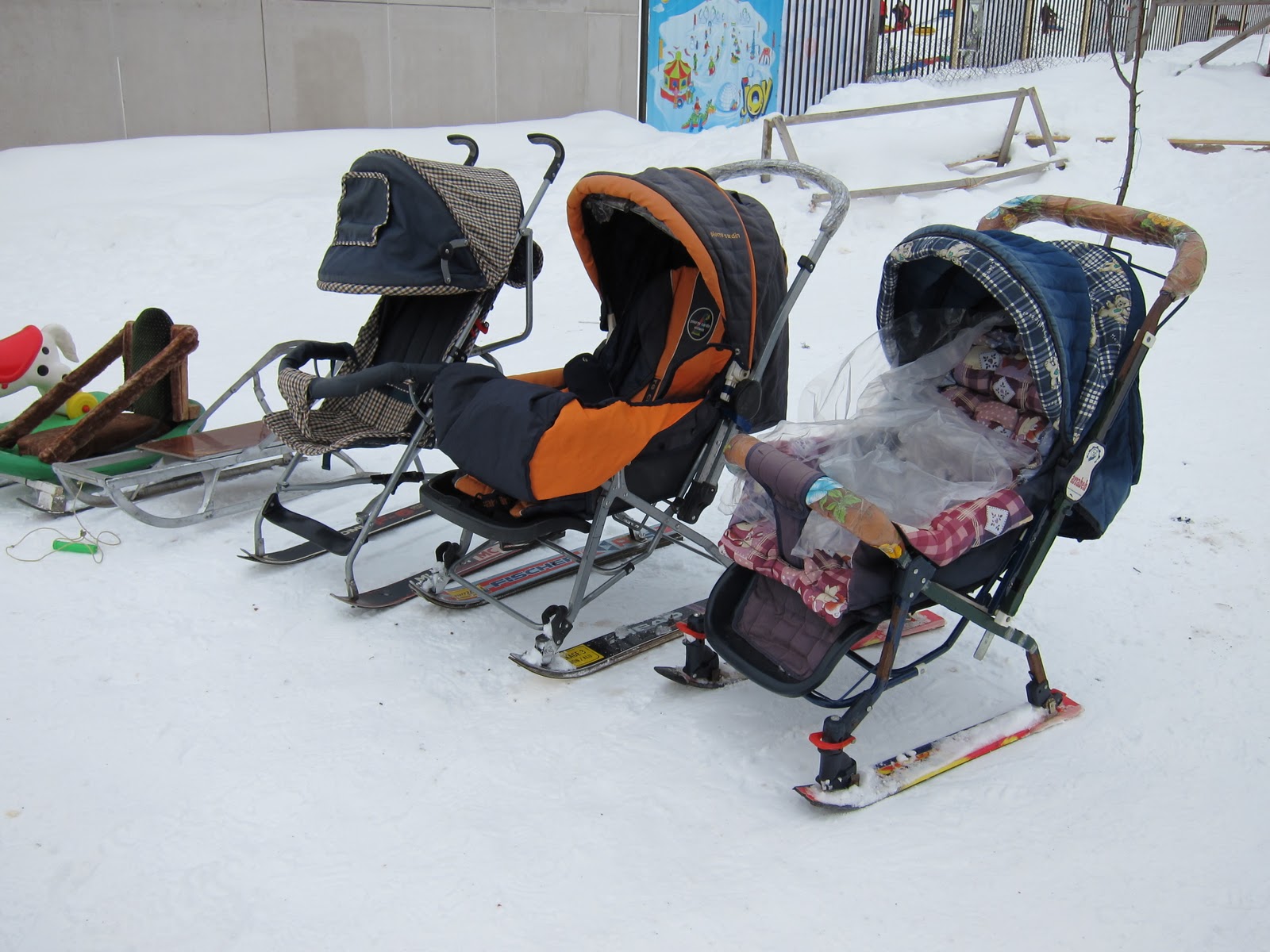
The strollers for rent had little skis attached to them. 

Dan emotionally preparing for his first day on the slopes.

Friday, March 11, 2011

The Day of the Tura

Sometimes, I can have an active imagination. For instance, one night during my first week here, my host brother came inside with a firecracker and waved me over to the back door. He motioned for me to listen, and I heard some howling in the distance. He lit the firecracker and threw it outside, where it presumably scared off the animal.
Afterward, I asked, "Wolf?", to which he replied, "No, tura, tura." Neither of us knew what a 'tura' translated to in English, and for 15 minutes or so, I had visions of a beast known as the "Tura" roaming the giant hill behind our house. It was something no American had ever seen before, sort of a combination of a grizzly bear and werewolf, with glowing red eyes and fangs as long as my fingers.
At that point, my host brother found his old Soviet-era dictionary and found the translation:
"tura - n. jackal"

This overactive imagination made itself known again the last week of Februrary. We had a really windy week, which one night led to my room door and window swinging open loudly at 4 AM. Visions of Paranormal Activity briefly dominated my thoughts before falling back asleep.

My imagination took another flight as we planned our next trip. For the last weekend of the month, we took the night train to Gori, a town about 90 minutes west of Tbilisi. Gori is most famous as the birthplace and childhood home of Josef Stalin. During my initial trip from Tbilisi to Zugdidi (wayyyy back in January), I remember looking south from the road as we passed Gori, and seeing a collection of shadowy buildings wedged between two mountains and covered in a dense fog that seemed anchored to the city.
These two things gave me some apprehension about visiting Gori. I pictured it as a place of great evil. I very much had it pegged as a snowy, urban version of the Dagobah cave.

"What's in Gori?" "Only what you take with you."


In fact, Gori was none of these things (except snowy). We had a nice time walking around the town and climbing up to spot where a fortress had been since ancient times, and where the current stone structure dates from the Middle Ages. It provided a lovely view of the town and the mountains to the north, which comprise the southern border of Tskhinvali Region (South Ossetia).

The big attraction in Gori, however, was the Stalin Museum. It was conveniently located on Stalin Ave. The outside is notable for a green train car and a large stone statue of Stalin, recently relocated by the Georgian government (in the middle of the night) out of the town's main square (Stalin Square). The same statue is replicated inside, and there's another inside Gori's train station. The yard also features Stalin's boyhood home, where he lived for the first four years of his life. It's a small building, and his family rented only one tiny room in it. Now, it's protected by imposing columns and stands alone as the only surviving building from his old neighborhood. Apparently, the others were bulldozed to make room for some sort of museum.
If you lived here, you'd be home by now and one of the most murderous rulers of the 20th Century

 Inside, the museum is chock full of pictures and artifacts our guide was sure to speed us past without getting a chance to enjoy them. There were paintings (Young Stalin in a Field Outside Gori, Stalin at the Seminary, Stalin with Stalin's Mom, Stalin Leading the 1905 Revolution He Actually Played Little to No Role In), poems (Stalin's pastoral poetry), and newspaper articles (Stalin Wins War!) There are lots and lots of photos. Some of the best include 'Stalin as a Young Man' (and quite a handsome one at that), 'Stalin Awkwardly With His Arm Around The Founder of the KGB', 'Stalin Voting for Stalin', 'Stalin With Lenin and a Whole Bunch of Other Bolsheviks Who Aren't Trotsky', and 'Stalin Definitely Not Sending Millions to the Gulag'. There are a number in which Stalin seems to have been enhanced or possibly added later, and one of Stalin with a large number of military officers, a few of whom seem to have different lighting, as if they were originally in a different picture.

Stalin proves he has a Cheka friend
Top left is Trotsky, killed by Stalin. Bottom right is Khrushchev, who denounced Stalin after Joe's death. To his left is Lavrentiy Beria (another Georgian) who purged millions for Stalin until he was purged. And then to the left of Beria...
We have this guy. GLENN BECK WAS RIGHT


There are also a lot of gifts Stalin received, including a mink coat ("He never wore it," added our guide), a giant table clock/lamp/compass/desk with a big tank on it, and a plate from the PR China for its 50th birthday in 1999 ("Oh, he's been dead for 45 years?" said China, "How embarrassing. Our mistake.")

Background: Stalin's house (exterior). Foreground: Statue of unidentified figure.
Notable for its absence was the mention of anything really negative about Stalin. I never heard the word "gulag" once, nor was there any mention of the Ukrainian famine in the 1930s or his purges of just about everyone. The guide did show us the small space the museum devoted to the Nazi-Soviet Non-Aggression pact signed in 1939, which included a picture of a smiling Stalin shaking hands with the Nazi foreign minister. For some reason, this picture had deteriorated far more than any of the others in the museum. The guide noted that soon after the pact was signed, "Hitler broke the agreement by invading Poland." Although the Museum only showed the first, public part of the pact ("The USSR and Germany are friends and promise not to attack each other..."), both the guide and display left out the second part of the pact ("...and super secret promise to cooperate with invading Eastern Europe.") and the fact that invading Poland was a fulfillment, not a violation, of the agreement.


"Stalin and Soviet Foreign Minister Molotov with unidentified man who is most definitely not Nazi Foreign Minister Von Ribbentrop"


We also got to visit Stalin's personal train car, which he used due to his intense fear of flying. Stalin's toilet was probably the top attraction. On the way out of the museum, I poked my head in the gift shop, but aside from some books ("Stalin Kills His Team of Rivals"), a few statues (Stalin Looking Heroic, Stalin Looking Heroic Again), and commemorative plates, the only thing that really interested me were some baby booties I saw hanging on the wall. I couldn't tell if they had Joe's picture on them or not. In other words, the museum is well worth a visit, but I'd recommend skipping the guide.


Stalin's toilet on his train car
It's like the old adage "Vote Early, Vote Often", except replace "early" with "Stalin" and "often" with "Stalin; also you are under arrest"

Meanwhile, back home, the power was out for 10 days in the days around my trip to Gori. It's been very windy, and the old Soviet electrical system just wasn't up to handling it. Fortunately, we have running water - a friend of mine in another village outside Zugdidi lost power, and with it, use of the electric crank to his family's well. He now is subsisting on hand-cranked well water, which takes a while and must be used sparingly. Power is back on now, and hopefully will remain so.

Next up: Bakuriani!

Stats:
4 - children hiding behind Stalin's train car planning a snowball ambush during our visit. (And you thought Stalin had Snowball exiled...)
2 - UNHCR SUVs parked outside the apartment building next to our hotel in Gori. Both Zugdidi and Gori have large IDP/refugee populations, as they're both located close to Georgia's conflict-prone breakaway regions (Zugdidi to Abkhazia, Gori to Tskhinvali/South Ossetia). Both towns have sections of identical houses for those IDPs, along with a number of international NGOs, the UNHCR, UNDP, and World Food Program. Both towns were also occupied by Russia in the 2008 war, so they both host EU Monitoring Missions presumably keeping an eye on the ceasefire.

Vocabulary:
atami - peach
amindi - weather
gemrieli - delicious
deda - mother
mama - father
cheemagoatch - friend (Magrelian)

Phrases the authors thought were important to include in my Georgian-English phrase book:
"Piss off."
"He's a tacky bloke."
"He's a tawdry guy."
"He's got the buzz."
"Stop it with the PDAs/Stop it with the petting (inappropriate places)"

Saturday, February 26, 2011

I can see Russian-occupied territory from my backyard

It's been a while since my last update, largely due to periodic but short bursts of internet access.

Kate and I traveled to Kutaisi, Georgia's second city (as seen in McDonald's related photos below) for a weekend, then made a visit to Tbilisi the next weekend. The Kutaisi trip was largely hampered by a lot of rain, though I plan on returning. Its development made me realize how Zugdidi is really a frontier town, located on between the Black Sea, the northern Caucasus, and occupied Abkhazia. It's the last stop on the road. Not a judgment, just an observation.
Tbilisi was another story. After arriving late Friday night, we found cheap accommodation with a lovely woman who spoke no English, but with whom we were able to speak in broken German and more broken Georgian. (Note: I have relied on German here far more often than I did during the few weeks I've spent in Germany. My year of studying Russian has proven very helpful as well.) We met up with some other friends in Tbilisi, viewing a concert by Raughley and some of his students. (Raughley and I worked together in college, and it's his blog that inspired me to do this program.)
On Sunday, we visited Vake Park, a beautiful park in northern Tbilisi that hosts the Iranian Embassy and (allegedly) masks the mass graves of the victims of Stalin's purges. It also has a large Soviet-era World War II memorial, commemorating the contributions of Georgians toward the USSR's victory in the war. It gives the dates of the USSR's involvement as 1941-1945, omitting what the Soviets were up to during the first twenty months of the war.
The monument provided some beautiful vistas of Tbilisi and the surrounding Caucasus Mountains, which seem to go on forever. There's a very definite line where the city ends and the wilderness of the mountains begins. Hopefully Kate will post pictures of it.

We intended to visit Gori, Stalin's hometown, as well, but that will wait for our next journey.

Teaching is going well. I recently saw a news clip that seemed to show Georgian Education Ministry folks buying new textbooks from the Oxford Press, presumably in an effort to standardize the English curriculum throughout the country. Hopefully, this also means the Ministry will be buying henceforth the books for students, rather than having the students buy their own books.

Aside from the books, sometimes classes are hampered by teaching materials (posters, charts, pictures) that date to Soviet days, when English speakers were rare visitors to Georgia. One such Soviet poster details parts of the body, including "A thooth" (arrow pointing to teeth), "a hear" (arrow pointing to a guy's hair), and "a foot" (arrow pointing to a guy's thigh). Another pairs the letters of the alphabet with labeled picture examples: for H there's a picture of a "Horce", for S there's a picture of some sort of snail/centipede creature labeled "Sink", and for B a picture of a grizzly is accompanied by the label "Beer". N is correctly paired with a picture of a Nilgai, though I'd never heard that word before coming here. (I originally thought it said "Naz'gul".)
"M is for Mordor, N is for Nazgul" is widely considered Tolkien's worst book.

A good number of the problematic books list the British Council as an adviser, including one in which a fictional Georgian teenager visiting Chicago writes that "it's April," and "baseball season is starting", so everyone is walking around wearing "Chicago Bulls jerseys." My theory on this is that some Briton had heard of the Chicago Bulls and heard of baseball, then Googled the two terms and believed they had a match when they found a picture of Michael Jordan during his year in the minor leagues.

The funniest thing I've seen here so far is the Iranian laundry detergent pictured below. The word apparently means "snow", but...

"Not in here, Mister! This is a Mercedes!"

I like how happy the family looks. ("Honey, it's Barf!" "I know, isn't it wonderful?")


Stats:
1.74 - as of today, the Lari/$ exchange rate. It was about 1.8 when I arrived.
1 - times I've seen Wisconsin on the news here so far. I'd like this number to remain low.

Georgian words:
qaraqi - butter
qalaqi - city
tsvimiani - rainy
vlaparakob (germanuli) - I speak (German)
skami - chair

Phrases the authors thought were important to include in my Georgian-English phrase book:
(in order)
"I want to get to know you better."
"Can I kiss you?"
"Do you want to come inside for a while?"
"Can I stay over?"
"I'm serious about you."

Tuesday, February 8, 2011

A Photo Montage: In No Particular Order (sorry about the lousy format)

This food was apparently too slow.  
Soon after I came home today my host mother's phone rang. After speaking for a few seconds she hung up and said, "the meat is here." We apparently bought an entire cow and had it slaughtered earlier in the day. The meat was still steaming hot when it was delivered in the back of someone's SUV. All the organ meat was stuffed into the stomach, which was put into a huge wicker basket. The rest of the cow that is not in the kitchen sink is hanging by hooks in the back yard.

"What did I get myself into?"
 One of these pictures is us just leaving New York City.  The other is 5am two days later in Tbilisi.  Can you tell which is which?                                   You may be surprised.

Pleasantly nick-named "face-huggers"


These are Khinkali; Georgian traditional fast food.  They are steamed dumplings stuffed with a mix of pork and beef and some tasty seasonings.  They are finger food.  To eat them you cover them in pepper, grab them by the knot on the top, turn it upside down, bite a small hole and suck out the meat juices. Then eat it.  But not the knot!  That is just the handle.

 
Here is my street out the window of my bedroom facing West.  What's that mountainous region in the distance, you may ask?  It's Abkhazia.

Here is the same view the last few days.  Brrrrr.

This is my school--Skolashi number 9.  It's either a fixer-upper or a tear 'er downer.  
Dan demanded to get a MacHamburgi Happy Meal at the one McDonalds in Georgia.  Unfortunately they told him he was neither under twelve nor the president.  
Things that make you go 'mmm'

My second Super Bowl abroad

Four years ago, while studying in Dublin, I watched the Colts-Bears Super Bowl at a sports bar in that city. The place had about 17 Bears jerseys and maybe 2 Colts ones, so the majority of the place was disappointed at the outcome. The game came in crystal clear, though, beamed into the TV on Sky Sports, Rupert Murdoch's British satellite sports channel.


Four years later, a different story.

Sure, I watched it on a laptop in a basement at 3:30 am on a school day.

Sure, the internet feed was choppy for 75% of the game, only relenting during the 2nd quarter. (On a bright note, it was choppy during much of the halftime show as well.)

Sure, I only saw one touchdown (Greg Jennings' second) live.

Sure, I saw the Steelers' last play as their QB taking the snap, then freezing for ten seconds, then a shot of Aaron Rodgers celebrating, indicating (somewhat anticlimactically) that the Packers had won.

Sure, had I been in WI, there would have been bedlam around me.

But:

This man is not Mikheil Saakashvili